
Ever tried to force yourself into a pose that just wasn’t designed for your body? I think we’ve all been there! Lotus Pose (Padmasana) is one such pose that many of us want to do. We may well never achieve it though – and that’s ok.
Imagine doing some quick online searches for meditation and Yoga poses. Chances are you will get some photos of beautiful people, looking serene. They will be sitting in Lotus Pose and making it look effortless.
If you spend any time delving through Yogic wisdom on the subject, you could be forgiven for thinking that Padmasana is the answer to everything. It brings you wisdom and enlightenment.
What happens if your body simply won’t allow you to achieve this miraculous pose? Should you give up in the knowledge that you will never achieve greatness and enlightenment?
Benefits of Padmasana
There’s no doubt that Lotus Pose is strongly linked in our collective Western minds with health, spirituality and contentedness. This is mainly because it is widely used to represent these things in Yoga and wellbeing related content.
But what actual benefits can it claim to have?
- Padamasana has a long tradition of being used in meditation practices in Asia where it is represented in religious artwork and teachings
- According to the Hatha Yoga Pradipika, Lotus Pose is the destroyer of all disease and will bring great wisdom if practiced enough
- BKS Iyengar claimed that Padmasana increases blood circulation in the abdomen and lumbar region, toning the spine and abdominal organs
- As a seated posture for meditation, Padmasana is supposed to be a steady pose, creating an upright spine (enabling free flow of breath) and can be held for a lengthy period of time in order to develop concentration and focus
In reality, most practitioners will struggle to maintain this pose for a lengthy period of time. Even those with the required anatomical structure to achieve it may experience discomfort at some point.
The claims regarding circulation and toning of organs have no clinical evidence to back them up. However the multiple injuries caused by those trying to force themselves into this pose have been documented.1
My hips are too stiff!
I remember being in an advanced class and feeling completely humiliated by my super-tight hips. We were told that Easy Pose (Sukhasana) was for beginners and that we should sit in Perfect Pose (Sidhasana) or Lotus Pose to meditate.
We were then told that some people with tight hips (it was stressed that this was mainly men) could try Hero Pose (Virasana) instead. Cross-legged poses are excruciating for me to hold for any length of time, especially first thing in the morning when I’m even stiffer, so I sat in Hero Pose!
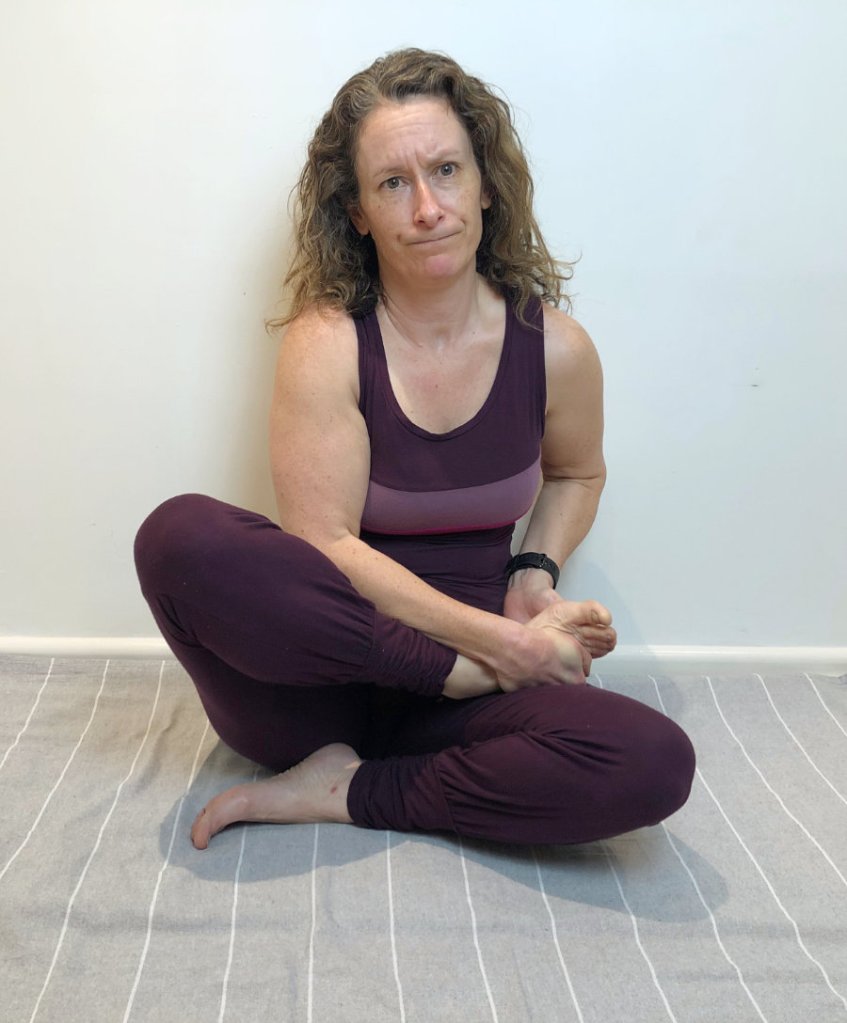
Later we were encouraged to try various versions of poses which introduced Half Lotus as a component. I found that after sufficient warm up I could do some of these with my right leg but never my left leg.
It was hard to keep my ego in check at the time and I became frustrated that I couldn’t achieve this ultimate Yoga pose. Watching the other (younger) students effortlessly practicing made me feel completely inadequate. I felt old, stiff and useless.
Hip tip for Yoga Teachers!
Please avoid making assumptions about or relating tight hips to gender!
– Not all women have flexible hips
– Not all men have tight hips
– Not everyone will identify with these gender references
What stopped me?
What I hadn’t realised was that my anatomy meant that I was never likely to achieve Lotus Pose (or even Half Lotus Pose) without doing myself serious injury.
- My hips are very tight and I sit down for long periods of time for my online work
- I didn’t start practicing yoga until I was in my mid-thirties and was fairly stiff before I started
- Even when I started to work through the tension, I would find myself becoming stuck – my bones were basically getting in the way!
- No amount of Yoga is going to change the shape and configuration of my bones!
I am unique, you are unique
There are four main anatomical factors that influence the rotation inwards and outwards at the hips:
- Length of the neck of the femur (thigh bone)
- Depth of the hip socket
- Thickness of the labrum (cartilage lining the socket)
- Ligaments and rotator muscles in the hip area
The angle and position of the hip socket and the shape of the femur and pelvis also have a role to play in how mobile our hips are.
Even if I could work through all my tension, I know that my hips have a natural tendency to rotate my thighs inwards. The degree of inward rotation is also different on each side.
I find poses such as Eagle Pose (Garudasana) are definitely far easier for me than outward rotating poses such as Bound Angle (Badha Konasana).
Don’t force it!
If the hip doesn’t allow the thigh to externally rotate enough, the twisting required will transfer into the knee and ankle instead – ouch!
When you can’t (or don’t want to) do Padmasana
The first thing to ask yourself is why you want to sit in Padmasana.
Is it to create cool pictures for Insta, show your work colleagues how bendy you are or achieve great wisdom? If so then go for it! As long as you feel zero pain and don’t need to twist your knees or ankles when practicing it.
You may be blessed with externally rotating hips that simply allow you to do the pose and if so that’s great. Just don’t expect to be enlightened by the experience!
For those of us with less accommodating anatomy, the second thing to do is accept that you won’t achieve the pose. This can be difficult!
When many of us practice physical exercise it’s on the assumption that we will constantly get better with practice. Yoga is more than just physical exercise and choosing alternative poses (see below) can help.
This is also where the other aspects of Yoga can help. Bring your focus inwards, pay attention to what you feel and don’t judge yourself.
Practice Ahimsa – be kind to yourself. There is not a hierarchy amongst poses and you are not inferior just because you chose not to practice certain poses.
Healthy alternatives
So what can you do if Padmasana is not for you? If you’re wanting a position which allows you to meditate or practice Pranayama (breathing exercises), the following are all good alternatives:
- Easy Pose (Sukhasana) using a block, blanket or cushion to lift the hips
- Perfect Pose (Siddhasana) using a block, blanket or cushion to lift the hips
- Hero Pose (Virasana) sitting on the floor, blocks or a bolster
- Sitting with legs bent in front using a wall to support the back
- Sitting on a chair with back support and feet on the floor
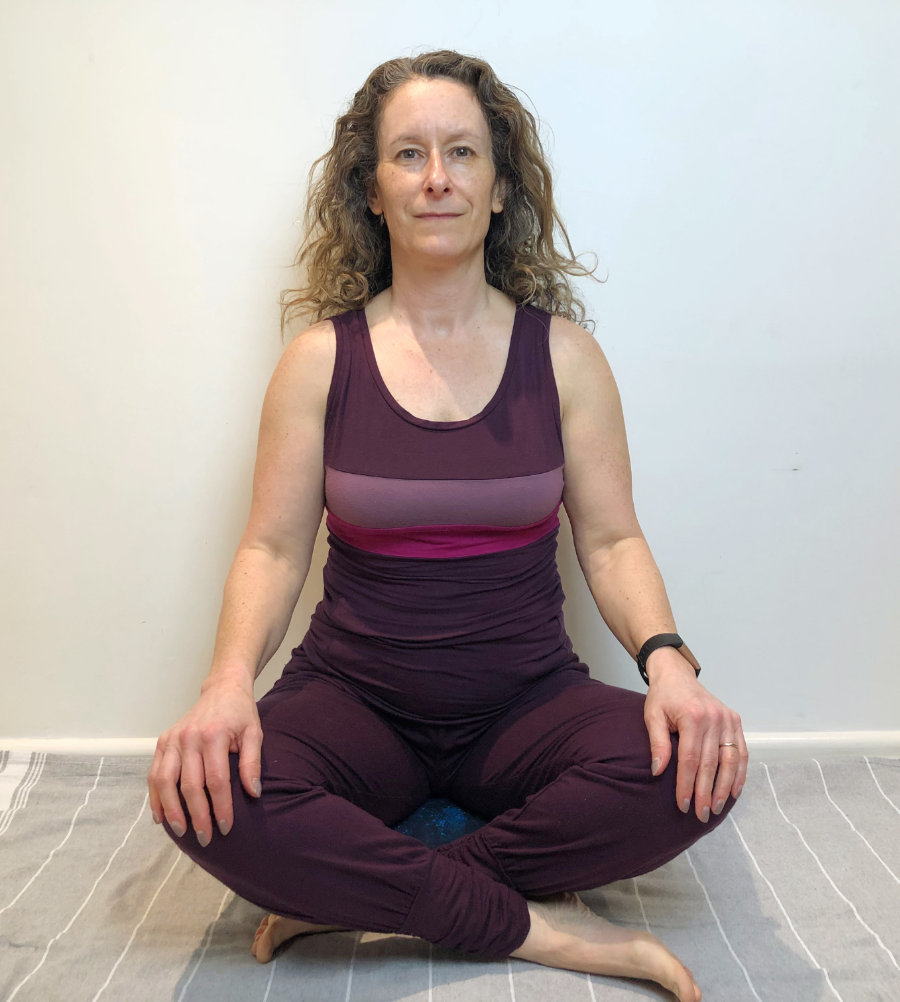
Easy Pose 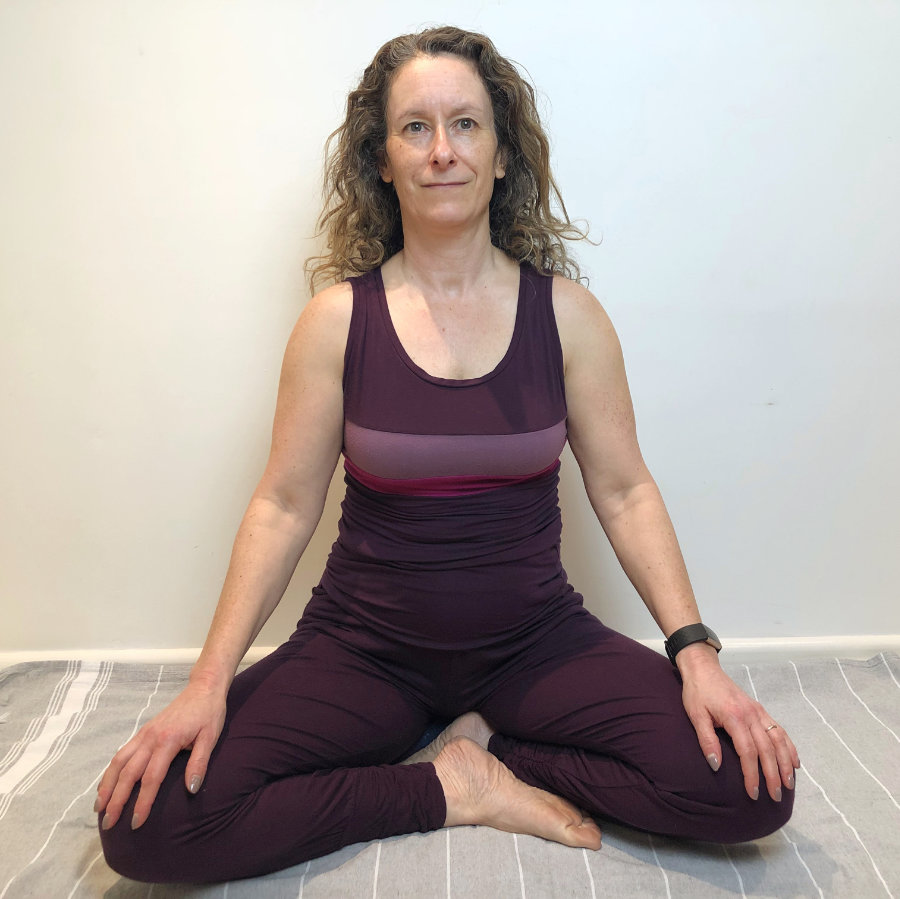
Perfect Pose 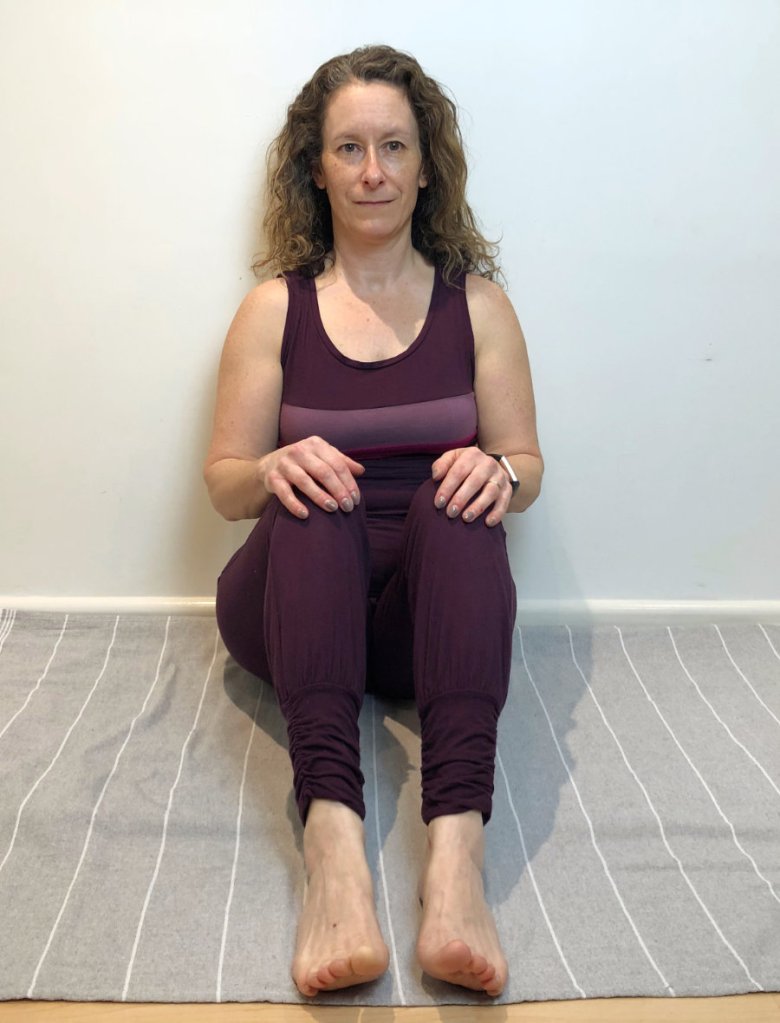
Sitting at the wall 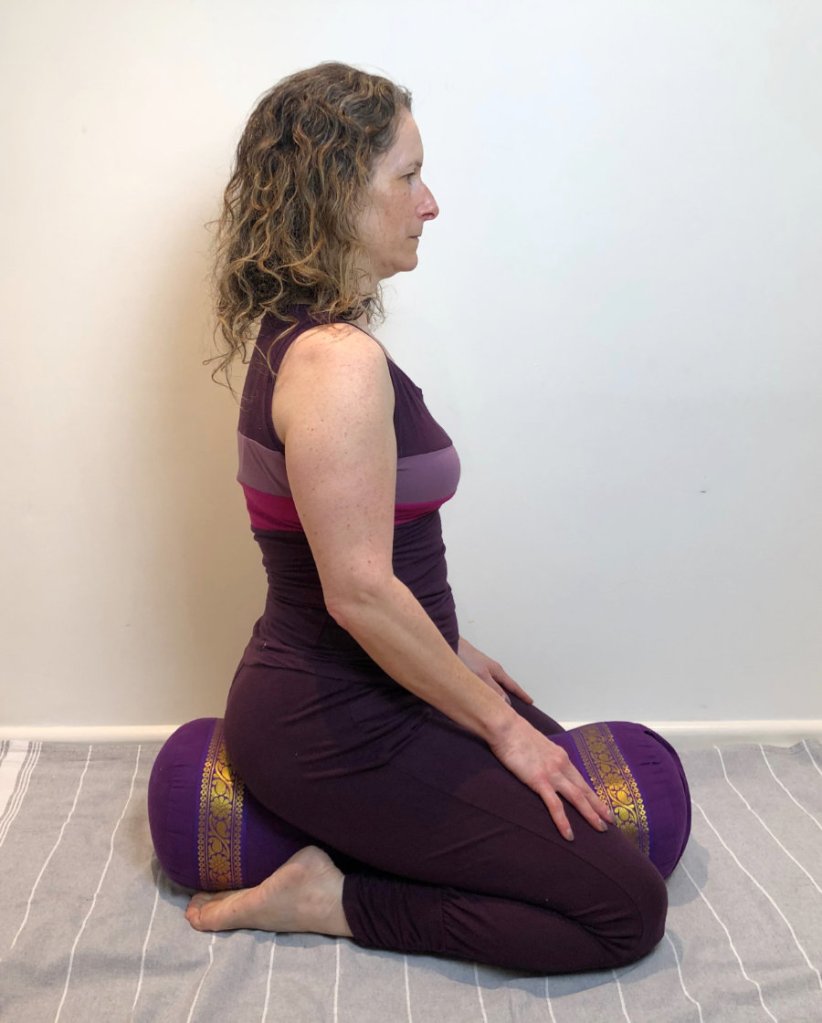
Hero Pose 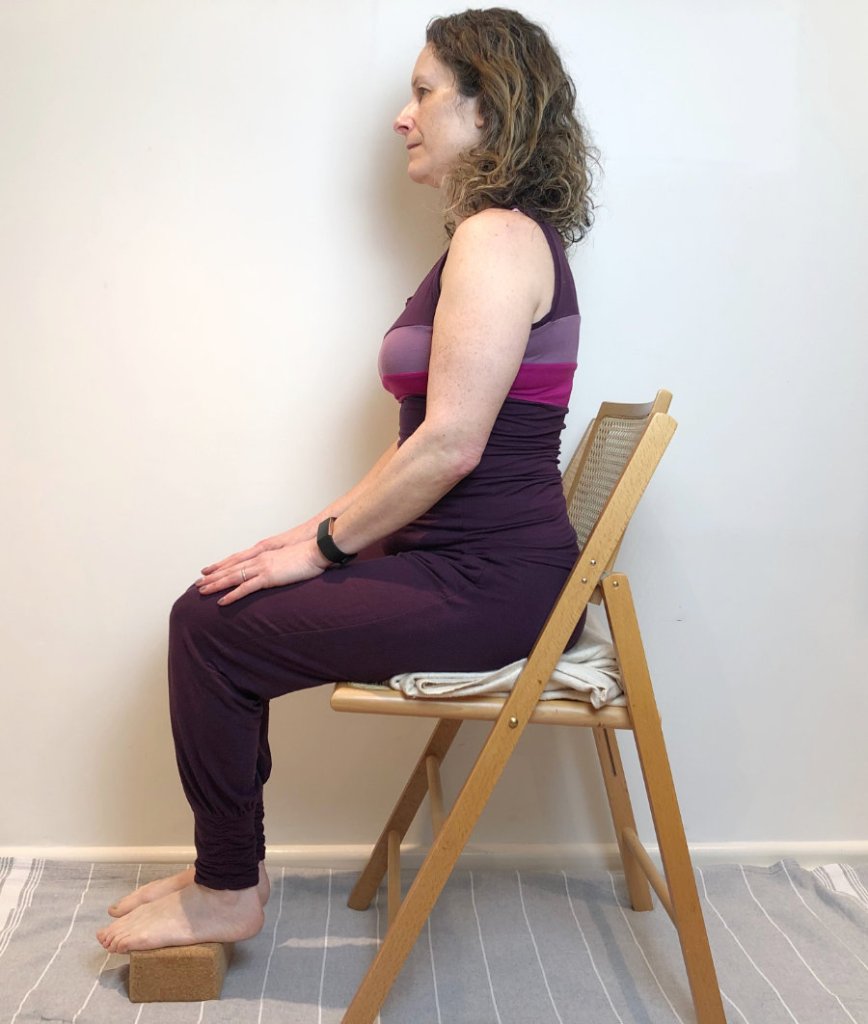
Sitting on a chair
All of the above can be adapted with props – just ensure you pick a pose that works for you and your body. Some poses may not be suitable if you have injuries. If in any doubt please consult your healthcare provider.
Are you a Lotus Lover or Lotus Loather?
Does it really matter? It’s just one pose amongst thousands. One tiny part of the physical practice that of Yoga. One microscopically small part of the wonderful science and philosophy of Yoga overall.
If it brings you fulfilment and joy then embrace it. If it doesn’t then that’s fine as well. Remember that you can still be fulfilled, wise and enlightened within your Yoga practice!
Further reading
Bernie Clarke’s analysis of Lotus Pose in Yoga International – https://yogainternational.com/article/view/lotus-pose-destroyer-of-disease-or-destroyer-of-knees
Reference
- Cramer H, Krucoff C and Dobos G. Adverse Events Associated with Yoga: A Systematic Review of Published Case Reports and Case Series. PLoS One. 2013; 8(10): e75515. https://www.ncbi.nlm.nih.gov/pmc/articles/PMC3797727/

 Power Yoga and Yin Yoga | Yoga in Hertford Hertfordshire | Jasmine Yoga UK