“When the breath wanders the mind also is unsteady. But when the breath is calmed the mind too will be still, and the yogi achieves long life. Therefore one should learn to control the breath.”
Hatha Yoga Pradipika
When someone starts yoga for the first time they are often confused and perhaps even frustrated by the amount of breathing they need to focus on and which I’m frequently reminding them about. When you’re trying to stand on one leg or even simply lying on the floor – why does it matter anyway? Why does the teacher keep saying “And breathe….” in a soothing voice (answer to this one at the end!)?

To take it back to basics – the breath is pretty important just in order to keep us alive! But as breathing is an autonomic function (meaning we don’t need to think to do it, it just happens) we don’t tend to spend much time paying attention to our breath. The only time we ever notice it is if we’ve eaten something pungent (like garlic) or we’ve “run out of it” by exercising hard, cycling up a hill or running for a bus!
Why we breathe
The cells in our body need sufficient oxygen to be able to function properly – the process of breathing moves oxygen into the lungs and flushes carbon dioxide from the lungs. The oxygen moves into the blood where it can be transported around the body for various functions within the body tissues.
The body adjusts the rate of breath to fulfill specific needs. If you’re running for the bus your brain will ask your breathing to speed up, to increase the amount of oxygen the cells in your muscles need, to produce the extra power required to run fast. But we can also override the automatic breathing pattern by controlling the breath – we do this all the time when speaking and eating.
Mind, body and breath
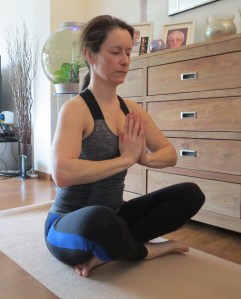
If we are stressed, our breathing becomes shallow and rapid. This triggers the production of the fight or flight hormones adrenalin and cortisol which increase blood pressure and heart rate.
Consciously slowing and deepening the breath activates the parasympathetic nervous system. This stimulates the vagus nerve which slows the heart rate.
Breathing correctly benefits the body and mind by reducing, stress, anxiety and depression, lowering blood pressure, increasing energy levels and relaxing muscles.
Pranayama
Yoga practice includes a focus on the breath – consciously controlling the speed and depth of the breathing pattern during poses or using it during transitions. Breath control (Pranayama) is the Fourth Limb of Pantanjali’s Eight Limbs of Yoga but is often overlooked in today’s yoga classes. However, it really is worth doing. Different breathing techniques can produce very different results and the best news is that Pranayama can be done anywhere – although you may want to avoid practicing Kapalabhati (to be covered in a future article) on the bus!
And breathe…
So why does your yoga teacher every so often say “And breathe…”, usually when you’re in Downward Facing Dog pose? They may be giving you the opportunity to steady your breath – but they may also need a moment to breathe themselves!
Useful links
Yoga Journal – The Science of Breathing

 Power Yoga and Yin Yoga | Yoga in Hertford Hertfordshire | Jasmine Yoga UK
Thanks for the blog https://takealeap.blog
LikeLike