
What is a twist?
A twist is where two opposing parts of the body come together. Seated poses such as Ardha Matsyendrasana (Half Lord of the Fishes Pose) and standing poses such as Parivrtta Parsvakonasana (Revolved Side Angle Pose) are examples of twists.
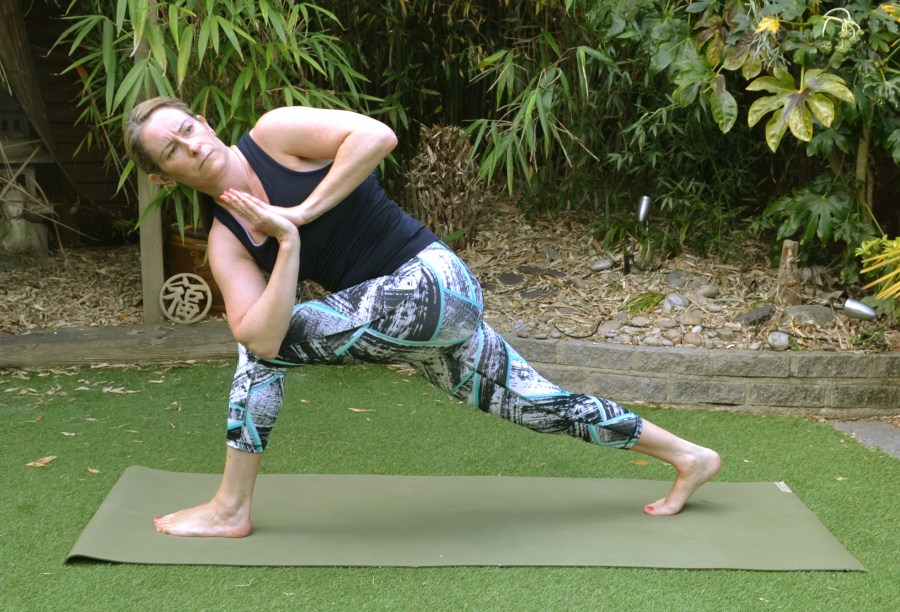
The act of folding and then opening is said to stimulate the internal organs, increase the blood flow and eliminate toxins. Spinal twists are also said to massage the internal organs of the abdomen, in particular the lower parts of the digestive tract.
Unfortunately there is no evidence to back any of this up. Healthy digestive systems are pretty good at doing their work without us having to twist. We do need to look after them though!
Twists really work their magic by enabling us to rotate the spine on its axis. Moving our bodies safely in ways they don’t usually move, helps with mobility and overall wellbeing.
Why the gut is so special
At least 26 hormones are produced by the gut and it is often referred to as the second brain or the enteric nervous system (ENS) – the brain of the body as opposed to the mind. The ENS is constantly communicating with our brain, relaying information about the state of our digestion which may impact our emotional state and affect metabolism.
For digestion to be effective, water, roughage (high fibre foods such as vegetables) and movement must all be present. Problems can develop in the lower digestive system if these criteria are not met.
How the gut works
The journey of food through the intestines is aided by peristalsis – tiny movements of the muscles in the intestines which effectively squeeze the food along. Peristalsis is affected by movement – lack of exercise reduces the contractions and can contribute to slowed digestion and extremes of movement (such marathon running) can cause diarrhoea as the muscles of the intestinal tract relax due to the body releasing adrenalin (the fight or flight response).

Gut issues
Constipation can be caused by stress (tension begins on the inside), lack of exercise, poor bowel habits (ignoring the urge to pass stools), poor diet and some medications. Hard stools become impacted, are difficult and painful to pass, and can cause haemorrhoids and lead to bowel incontinence. Over time they can cause bulges in the colon (diverticules) which can cause diverticulitis if faecal matter becomes trapped in them. Diverticular disease was always considered to be a disease of older people but due to modern lifestyles, the incidence is increasing in those under the age of 40.
When waste enters the ascending colon from the small intestine there is an issue due to the size difference between the two intestinal areas and impacted faecal matter can back up against the appendix, leading to inflammation and appendicitis. It’s a very common condition – about 40,000 people are admitted to hospital with appendicitis each year in England alone. Estimates suggest around 1 in 13 people will have appendicitis at some point in their life and I am one of them! It’s incredibly painful and unpleasant to have but if caught early is fully treatable by removal of the appendix.
Summary
Our bodies spend most of the time in the same plane of movement – forwards and backwards and sometimes side to side. They don’t often get the chance to rotate and this is why twists can be so beneficial – they allow our bodies to expand their range of movement.
It’s also important to be kind to your gut – eat fresh nutritious foods, include enough fibre, chew thoroughly and drink plenty of water!

 Power Yoga and Yin Yoga | Yoga in Hertford Hertfordshire | Jasmine Yoga UK